

Blog
10 Surprising Facts | About House Cleaning Products | Chemistry
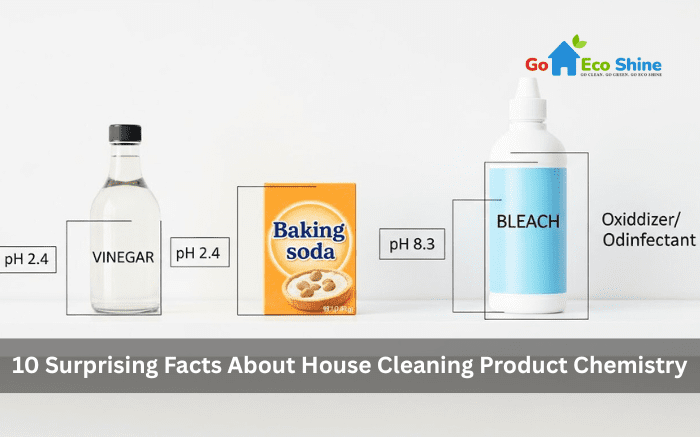
It’s just wild how much we don’t know about our everyday stuff. For example, those colorful bottles of House Cleaning Products sitting under your sink? They’re filled with total science magic, honestly. You think cleaning is just scrubbing? Nope! Instead, it’s a tiny chemical battle right there in your kitchen. This is what I found out.
🗺️ Table of Contents
The Secret Life of Soap Bubbles
The pH Scale is Not Just for Science Class
Bleach Does Not Actually Clean Things
Why Enzymes Are the Real Heroes of House Cleaning Products
Alcohols: A Double-Edged Sword
The Weird Truth About Vinegar
That Sudsy Feeling? It’s a Lie!
Quats: The Ghostly Germ Fighters
Scent is a Distraction, Frankly
The Danger of Mixing is Real
💧 The Secret Life of Soap Bubbles
Soap is actually part-water and part-oil lover. That’s what’s really happening. Because the molecules have two ends, you see. One end loves water; the other loves grease. This dual nature helps them grab dirt. They basically trap the dirt in tiny bubbles. Then, the water washes the whole mess right away. It’s truly ingenious, I think.
⚖️ The pH Scale is Not Just for Science Class
Remember pH from school? Well, it matters for House Cleaning Products. Acids (low pH) kill mineral stains well. For instance, limescale hates vinegar. Bases (high pH) destroy grease and oil. Conversely, using the wrong pH can ruin your stuff. Be careful with that marble countertop!
❌ Bleach Does Not Actually Clean Things
This one shocked me, honestly. Bleach doesn’t actually remove grime or dirt. Indeed, bleach is mostly a powerful disinfectant. It kills all the germs and bad stuff. Therefore, you must clean surfaces before using bleach. Cleaning first, disinfecting second—that’s the rule.
🦠 Why Enzymes are the Real Heroes of House Cleaning Products
Enzymes are like tiny, super-specialized scissors. They only cut one kind of stain. Specifically, they break down blood, food, or pet mess. They are great for biological messes. Moreover, they work much more slowly than other chemicals. Give them time to truly work their magic.
🥃 Alcohols: A Double-Edged Sword
Rubbing alcohol is a solid germ killer. It messes up germ cells completely. However, it evaporates too quickly sometimes. It needs contact time to kill everything. Also, it can seriously damage certain finishes. Don’t use it on furniture, please.
🍇 The Weird Truth About Vinegar
Vinegar is just plain acetic acid. It’s weak, but it’s very powerful. Consequently, it melts hard water stains right off. It’s also totally natural, which is cool. But, its acid content can etch stone. Seriously, keep it away from granite and marble!
🧼 That Sudsy Feeling? It’s a Lie!
We think lots of bubbles mean clean, right? That is what they tell you. Actually, suds don’t really mean better cleaning action. In fact, extra suds can sometimes make rinsing harder. Therefore, don’t judge the product by the foam amount. It’s totally misleading.
👻 Quats: The Ghostly Germ Fighters
Quats are short for Quaternary Ammonium Compounds. They stay on surfaces after drying. Thus, they keep killing germs for a while longer. You often find them in disinfectant wipes. However, they can be irritating to some people. Be sure to read all the labels.
👃 Scent is a Distraction, Frankly
Does it smell like pine or lemon? That is just perfume added in. Because the powerful chemicals don’t smell great alone. Scent has zero cleaning power, believe me. Instead, it’s just there to make you feel better. Don’t trust the scent for proof of clean.
🚨 The Danger of Mixing is Real
Never, ever mix bleach and ammonia. You know this, right? But mixing them creates truly toxic gas. It can actually kill you quickly. Always use House Cleaning Products one at a time. It’s just not worth the massive risk.
🧐 Quick Look at House Cleaning Products pH
Most all-purpose cleaners are mildly basic. Consequently, they are safe for most surfaces in your home. Special oven cleaners are strongly basic. They need to be that strong to cut baked-on grease. Furthermore, strong basics can totally burn your skin. Handle them with extreme care, always.
❓ Which Product Should I Choose Now?
Look for the active ingredients list always. That is what truly matters most. If you have mineral stains, grab the acid cleaners. If you have oil and fat, go for the base cleaners. However, use the specific tools for the specific job. It’s just smart.
💯 Keeping Your Chemistry Safe at Home
Remember to store products up high. Kids should never, ever reach them. Also, keep them in their original containers always. Never mix them into some weird new bottle. And please wear proper gloves and ventilation. Be safe when you clean, okay?
Related Posts
The Ultimate Bathroom Cleaning Checklist | Essential Household Items
-
Posted by
srhira55
Your Simple House Cleaning Products List for a Tidy Home
-
Posted by
10 Must-Have Cleaning Products for Every American Home
-
Posted by
Cleaning Products Guide for a Spotless Home and Office
-
Posted by